
 EN
EN
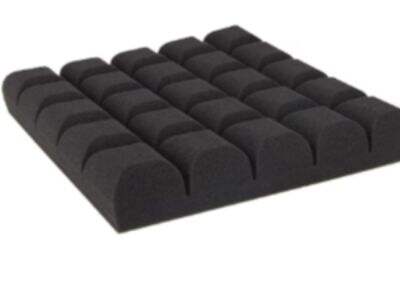
In case of sound-absorbing foam, the thicker is not necessarily better. JIANG FEN BEI is our company and we are engaged in the production of sound-absorbing foam of high quality to wholesale buyers. We witness the challenges on balancing between thickness and performance. This paper will debate the advantages of the use of thicker sound-absorbing foam to our wholesale clientele and analyze the differences in the sound insulation between 5cm and 10cm foam. The following are the benefits of thicker sound-absorbing foam to the wholesale buyers:
Pros of Thicker Sound-Absorbing Foam for Wholesale Buyers
Companies that want to soundproof their halls and other areas will enjoy a number of benefits of using thicker sound-absorbing foam as organizational buyers. To start with, it is applied to absorb low frequency sounds which are normally the most difficult to overcome. The low frequencies are prevented effectively by sound acoustic foam to generate less sound within our environment. Moreover, the thickness of the sound absorbing foam does a better overall sound absorption, reducing the echo and reverberation effect in wide open areas such as auditoria and recording studios. More ester foam can also be more durable when we sell it to our wholesalers and durable compared to the thin foam as it is not pressed to that extent. Therefore, a purchase of thicker sound-absorbing foam will result in a better sound insulation that enhances the sound experience of the customers.
What Are the Differences in Sound Insulation Between 5cm and 10cm Foam?
However, the difference in sound insulation between 5cm and 10cm foam depends on the environment and the range of frequencies a person desires to incapacitate. It can be assumed that thicker foam is more likely to facilitate better sound insulation against a vast array of frequencies. For instance, in a highly noisy office where ambient sounds are too high to decrease, 10cm soundproofing acoustic studio foam is likely to have lower speech intelligibility than 5cm. Nonetheless, if a person sees that the noise ranges are higher on low frequencies, such as in a classroom with students, 5cm foam is enough. Wholesale buyers should consider demand to compare the propriety of 5cm versus 10cm thickness. Hence, wholesale buyers buying 5cm or 10cm foam should be knowledgeable about the difference in sound insulation.
Alternatively, thinner foam may not soundproof as much sound as the thicker foam, making it less effective
However, thinner foam can be essential in certain situations, such as small rooms or accommodation with less space or restricted view due to foam bulkiness. How Thicker Foam Can Sometimes Be Less Effective Than Thinner Foam? While thicker foam may absorb more sound, it may not always be the best option for sound insulation. In some cases, if the foam is too thick, it may lead to over-absorption, making the room sound dull. Ideal for areas that require high sound insulation such as a music studio or an auditorium. Moreover, thick acoustic foam panels for soundproofing might be less environmentally friendly and more expensive; Subsequently, when selecting sound-absorbing foam thickness 5cm to 7.5cm will offer the best results for most applications, balancing the sound-absorbing qualities of the material and the space and its characteristics.
Thicker sound-absorbing foams insulation the sound better
Pickier sound-absorbing foams improve the sound absorption, but there is an optimal level of the thickness depending on various aspects such as the area of the room and anticipated noise levels. All these considerations are able to select the appropriate thickness to formulate the most appropriate amount of sound insulation.